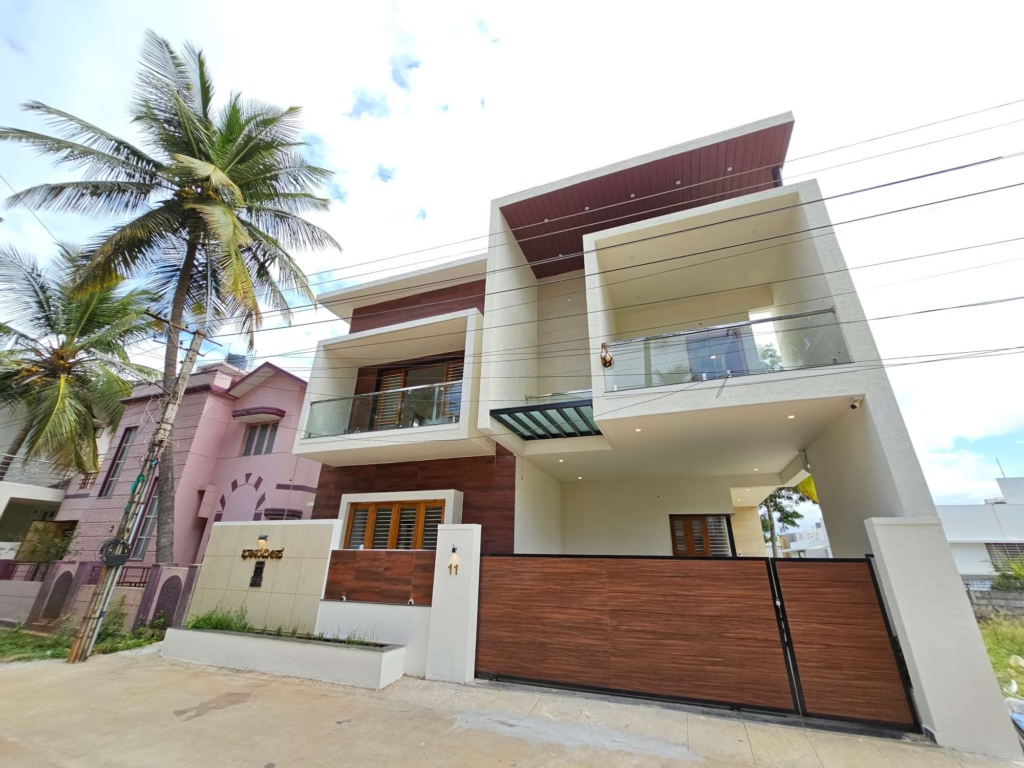
Building a home in Mysore is one of the biggest investments you will ever make. The city’s growing roads, lower land prices compared to Bangalore, and better civic services make it a great place to build your dream home. However, without the right knowledge and the right team, what should be a joyful journey can quickly turn into a stressful and costly experience.
This complete guide walks you through everything you need to know about home construction in Mysore — from buying the right plot and getting MUDA approvals to understanding costs, choosing materials, and avoiding the mistakes that derail most projects.
Whether you are building a small 20×30 house or a large 4BHK villa, this guide is your starting point.
Why Mysore Is a Smart City to Build Your Home
Before diving into the process, it helps to understand why so many people — from Bengaluru professionals to NRIs — are choosing Mysore for home construction.
Affordable land prices: Land in Mysore costs much less than in Bangalore. As a result, you get more space for your budget. Areas like Vijayanagar, Hebbal, Kuvempunagar, and Dattagalli offer great connectivity at fair plot rates.
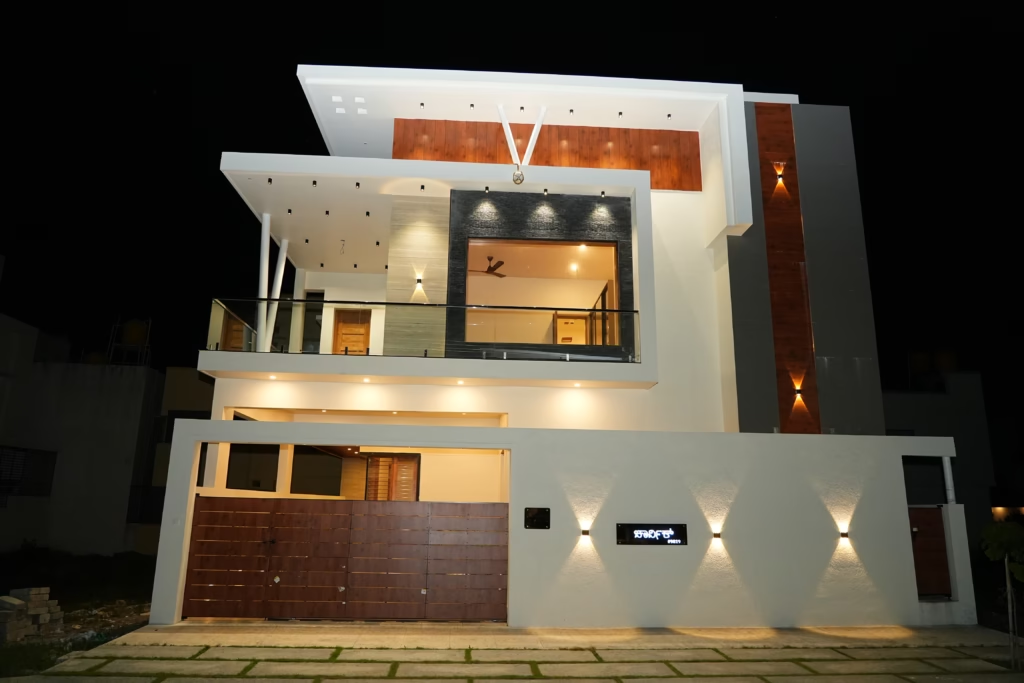
Strong civic services: Mysore ranks among India’s cleanest cities. Moreover, good roads, steady water supply, and reliable power make it a practical choice for long-term living.
Growing job opportunities: With more IT parks, hospitals, and colleges coming up, Mysore is attracting working professionals who need quality housing.
Peaceful living with city comforts: Unlike metro cities, Mysore offers a cleaner, quieter lifestyle. In addition, it gives you easy access to good schools, hospitals, shops, and the Bangalore expressway.
Step 1: Choosing the Right Plot in Mysore
Everything starts with the land. A wrong plot purchase can cause legal trouble that lasts years. Therefore, here is what to check before buying:
Check the Land Use Type
MUDA classifies land under different zones — residential, commercial, agricultural, and mixed-use. First, confirm that the plot is listed as residential. Agricultural land cannot be used for house construction without official conversion.
Verify Title and Ownership Documents
- Sale Deed — confirms ownership history
- Encumbrance Certificate (EC) — confirms no loans or legal disputes on the plot
- Khata Certificate and Extract — confirms the property is registered with the local authority
- RTC (Record of Rights, Tenancy and Crops) — needed for plots converted from agricultural use
Check Layout Approval
Make sure the layout is MUDA-approved or BDA-approved. Unapproved layouts often face problems with water connections, electricity, and resale value. Furthermore, always ask the seller for the layout approval number and verify it directly with MUDA.
Confirm Plot Size with a Survey
Hire a licensed surveyor to physically measure the plot and confirm it matches the documents. Because encroachments are common — especially on older plots — this step can save you from serious future disputes.
Step 2: Understanding MUDA Approvals and Building Permits in Mysore
This is where most homeowners get confused — and where delays begin. However, understanding the process clearly makes it much easier to manage.
What Is MUDA?
MUDA — the Mysore Urban Development Authority — is the body responsible for planned urban growth in Mysore. If your plot falls within MUDA limits, all construction must first be approved by them.
Documents Required for Building Plan Approval
- Ownership documents (Sale Deed, Khata)
- Site plan and survey sketch
- Architectural drawings prepared by a licensed architect
- Structural drawings certified by a licensed structural engineer
- NOC from BESCOM (for electrical connection)
- NOC from BWSSB (for water and sewage connection)
- Property tax receipts
Key Rules to Know
Floor Space Index (FSI): MUDA allows an FSI of 1.75 for residential plots in most areas. In other words, you can build up to 1.75 times the plot area as total floor space. Certain zones allow higher FSI under specific conditions.
Setbacks: You must leave open space on all four sides of the plot. For example, on a typical 30×40 plot, setbacks of 3 feet on the sides and 5 feet at the front and rear are common. That said, always confirm the exact numbers for your specific zone.
Height Rules: For homes up to G+2 (ground plus two floors), standard residential rules apply. Taller structures, however, require additional structural approval and permits.
Parking Requirements: MUDA requires dedicated parking space in all new construction. Therefore, make sure your plan includes this from the start.
Timeline for MUDA Approval
Generally, expect 30 to 90 days for building plan approval. Working with a local architect who knows MUDA’s paperwork well can cut this time significantly.
Step 3: Designing Your Home
Once your plot is confirmed and approvals are in process, design work begins. This is one of the most exciting stages — but also where key decisions are made that affect the rest of the project.
Hire a Licensed Architect
In Karnataka, all building plans submitted to MUDA must be signed by a licensed architect registered with the Council of Architecture (COA). Therefore, do not rely on draftsmen or unlicensed designers — it will cause problems during approval and when applying for your occupancy certificate.
What Your Architect Will Design
- Floor plan: Room sizes, layout, movement flow, and natural light planning
- Elevation: The outer look of your home — front, rear, and side views
- Section drawings: A vertical view showing floor heights, staircases, and structure
- Services layout: Position of electrical points, plumbing lines, bathrooms, and kitchen
Structural Design — Why It Matters
Your structural engineer designs the foundation, columns, beams, and slabs. This is the hidden framework that keeps your home standing safely for decades. Because a weak structure cannot be fixed later without huge cost, never cut corners here.
Soil conditions in Mysore vary a lot across areas. For instance, Hebbal and areas near the lake have soft, wet soil that needs deeper foundations. Areas near Chamundi Hills, on the other hand, sit on hard rock. A proper soil test (bore test) before design saves a lot of money during construction.
Vastu Compliance
Many homeowners in Mysore ask for Vastu-friendly layouts. Fortunately, a skilled architect can design a practical, good-looking home that also follows Vastu — this does not have to be a trade-off.
Step 4: Home Construction Costs in Mysore — A Realistic Breakdown (2026)
This is the question most people ask first. So, here is an honest and detailed answer.
Construction Cost Per Sqft in Mysore
| Package | Cost Per Sqft (incl. GST) | What’s Included |
|---|---|---|
| Basic | ₹1,700 – ₹1,999 | Standard materials, basic finishes |
| Standard | ₹2,000 – ₹2,500 | Mid-range materials, better finishes |
| Premium | ₹2,500 – ₹3,500 | Premium materials, quality finishes |
| Ultra Luxury | ₹3,500+ | Imported materials, fully custom |
Zenith Construction packages start at ₹1,999/sqft including GST — covering structure, basic finishes, and project management.
Sample Cost Estimate: 30×40 Plot (1,800 sqft built-up area, G+1)
| Item | Estimated Cost |
|---|---|
| Foundation and Structure | ₹9,00,000 – ₹12,00,000 |
| Brickwork and Plastering | ₹4,00,000 – ₹6,00,000 |
| Flooring | ₹2,00,000 – ₹4,00,000 |
| Doors and Windows | ₹2,50,000 – ₹4,00,000 |
| Electrical Work | ₹1,50,000 – ₹2,50,000 |
| Plumbing and Sanitary | ₹1,50,000 – ₹2,50,000 |
| Painting | ₹1,00,000 – ₹2,00,000 |
| Contingency | ₹1,50,000 – ₹2,50,000 |
| Total Approximate Cost | ₹23,00,000 – ₹35,00,000 |
What Affects Your Final Cost?
Soil conditions: Soft or wet soil needs deeper foundations, which adds cost. Hard rock plots may need blasting — and that adds cost too.
Number of floors: Each extra floor adds structural load and therefore increases the overall cost. A G+1 home costs less per sqft than a G+3.
Material choices: For example, the difference between standard vitrified tiles and Italian marble — or UPVC windows versus wooden frames — can add 20 to 40% to your finishing bill.
Labour availability: Post-monsoon months (October to February) typically see higher demand for workers, which can push daily labour rates up slightly in Mysore.
Design complexity: A simple box-shaped layout is cheaper to build than a home with curves, large cantilevers, or complex rooflines.
Step 5: Choosing the Right Materials
Material choices directly affect both the cost and the life of your home. Here are the key decisions you will face:
Cement
OPC 53-grade cement works best for structural work like foundations, columns, and slabs. PPC cement, on the other hand, is better for brickwork and plastering. Always stick to trusted brands — Ultratech, ACC, Dalmia — and check that bags are fresh by verifying the manufacture date.
Steel / TMT Bars
Use Fe500D or Fe550D TMT bars for all structural steel work. Never compromise on steel quality — unlike paint or tiles, steel cannot be upgraded later. Structural failure due to poor steel is dangerous and irreversible.
Bricks vs. Blocks
Traditional red clay bricks are widely used across Mysore. However, AAC (Autoclaved Aerated Concrete) blocks are lighter, better insulated, and growing in popularity. Because AAC blocks keep interiors cooler, they can also reduce your electricity bills over time.
Flooring
Vitrified tiles are the most popular choice for bedrooms and living areas. Ceramic tiles suit bathrooms and kitchens well. Natural stone like granite or marble works well for premium builds. Wooden or laminate flooring adds warmth to bedrooms in luxury homes.
Waterproofing
This is the most underestimated cost in home construction — and the most painful when ignored. Therefore, always invest in proper waterproofing for your terrace, bathrooms, and any underground areas. Good waterproofing now prevents very expensive repairs later.
Step 6: The Construction Process — Stage by Stage
Stage 1: Site Preparation and Foundation (Weeks 1–6)
- Site clearing and levelling
- Bore test and soil check
- Layout marking
- Excavation
- PCC (Plain Cement Concrete) bed
- Foundation construction based on soil type
Stage 2: Structural Work — Columns, Beams and Slabs (Weeks 6–20)
- Column casting up to plinth level
- Plinth beam construction
- Ground floor column casting
- Ground floor slab
- Repeated for each additional floor
This is the most important phase. The quality of concrete, proper curing, and correct steel placement here determine the safety of your home for its entire life. As a result, do not rush this stage or allow any shortcuts.
Stage 3: Brickwork and Plastering (Weeks 20–28)
- External and internal wall construction
- Door and window frame fixing
- Electrical and plumbing pipe embedding inside walls
- Internal and external plastering
Stage 4: Electrical, Plumbing and Sanitary Work (Weeks 24–32)
- Electrical wiring and switchboard installation
- Plumbing pipes for water supply and drainage
- Bathroom and kitchen rough-in work
- Provisions for solar water heater and inverter
Stage 5: Finishing Work (Weeks 30–40)
- Flooring installation
- Door and window shutters
- Bathroom tiling and fixtures
- Kitchen counter and sink
- False ceiling if required
- Interior and exterior painting
Stage 6: Final Works and Handover (Weeks 40–48)
- Exterior elevation finish
- Compound wall and gate
- Driveway and parking area
- Landscaping if included
- Final cleaning and snag list fixes
- Occupancy Certificate application
Step 7: Getting Your Occupancy Certificate in Mysore
Once construction is done, you must get an Occupancy Certificate (OC) from MUDA before moving in. This certificate confirms that the building was built as per the approved plan and is safe to live in.
Documents needed for OC:
- Completion certificate from your architect
- Structural safety certificate from your structural engineer
- NOC from the fire department (for G+2 and above)
- Tax paid receipts
- BESCOM and BWSSB connection documents
Do not skip this step. Because an OC is needed for home loans, property registration, and future resale, skipping it creates serious problems down the line. In addition, any construction that differs from the approved plan must be regularised before an OC can be issued.
Common Mistakes to Avoid in Home Construction in Mysore
Most construction problems are predictable — and therefore avoidable. Here are the biggest mistakes homeowners make:
Choosing the cheapest contractor: Low quotes almost always mean hidden costs later, poor material quality, or unfinished work. Instead, compare builders on reputation, past projects, and transparency — not just price.
Skipping the soil test: Mysore has very different soil conditions across areas. A bore test costs just ₹3,000–₹8,000. However, skipping it can cost you lakhs in foundation repairs later.
Changing designs mid-construction: Every design change after structural work has started costs more money — sometimes several times more than it would have during the planning stage. Therefore, finalize your design completely before work begins.
Not having a written contract: Always get a detailed written agreement covering scope of work, payment schedule, material specs, timeline, and delay penalties. Without this, disputes are hard to resolve.
Ignoring waterproofing: Mysore gets heavy rain during the monsoon. Poor waterproofing leads to seepage, fungal growth, and costly repairs within just 3 to 5 years.
Not keeping a contingency budget: Always set aside 15 to 20% extra over your estimated cost. Unexpected soil issues, price changes, and small design tweaks are normal in any construction project.
How Long Does It Take to Build a House in Mysore?
For a standard G+1 home of 1,500 to 2,500 sqft, here is a realistic timeline:
- MUDA approval: 1 to 3 months
- Construction (from structure to finishing): 10 to 14 months
- OC and final steps: 1 to 2 months
Total: 12 to 18 months from plot purchase to possession
Delays usually happen because of late material supply, labour shortages during festivals, design changes, or payment delays to contractors.
Why Choose Zenith Construction for Your Home in Mysore?
With over 11 years of experience building homes across Mysore and Bangalore, Zenith Construction has built a strong reputation as one of the most trusted residential builders in the region.
Transparent pricing: Our packages start at ₹1,999/sqft including GST. Moreover, there are no hidden charges — you know exactly what you are paying for before we begin.
End-to-end service: We handle everything — design, MUDA approvals, construction, interiors, and handover. In other words, one team, one point of contact, zero confusion.
Quality materials only: We use trusted brands for cement, steel, and all key materials. Furthermore, every batch is checked on site. No shortcuts, ever.
On-time delivery: We build realistic timelines and stick to them. As a result, your construction does not drag on for years.
Zero compromise on integrity: Founded by Punith Diwakar, Zenith Construction follows a strict policy — no bribery, no conflict of interest, no cutting corners.
Conclusion: Build Smart, Build Right in Mysore
Home construction in Mysore is a rewarding investment when you approach it with the right knowledge and the right team. The city gives you a real chance to build a spacious, quality home at costs that would be hard to match in Bangalore — but only if you go through the process correctly.
Therefore, understand your plot well. Get your approvals in order early. Invest in good design and quality materials. Choose a builder who values honesty and quality work. And plan your finances with a buffer for surprises.
Your dream home in Mysore is completely achievable. The key is starting with a solid plan — and a builder you can trust.
🏗️ Ready to Build Your Dream Home in Mysore?
Zenith Construction offers complete home construction services — from design and MUDA approvals to construction, finishing, and handover.
📞 Call us: 961-118-4850 | 991-619-3939 📧 info@zenithconstruction.in 🌐 www.zenithconstruction.in 📍 #378, Prakash Complex, JP Nagar, Mysuru, Karnataka 570008
Book your FREE consultation today. No obligation. Just honest advice.