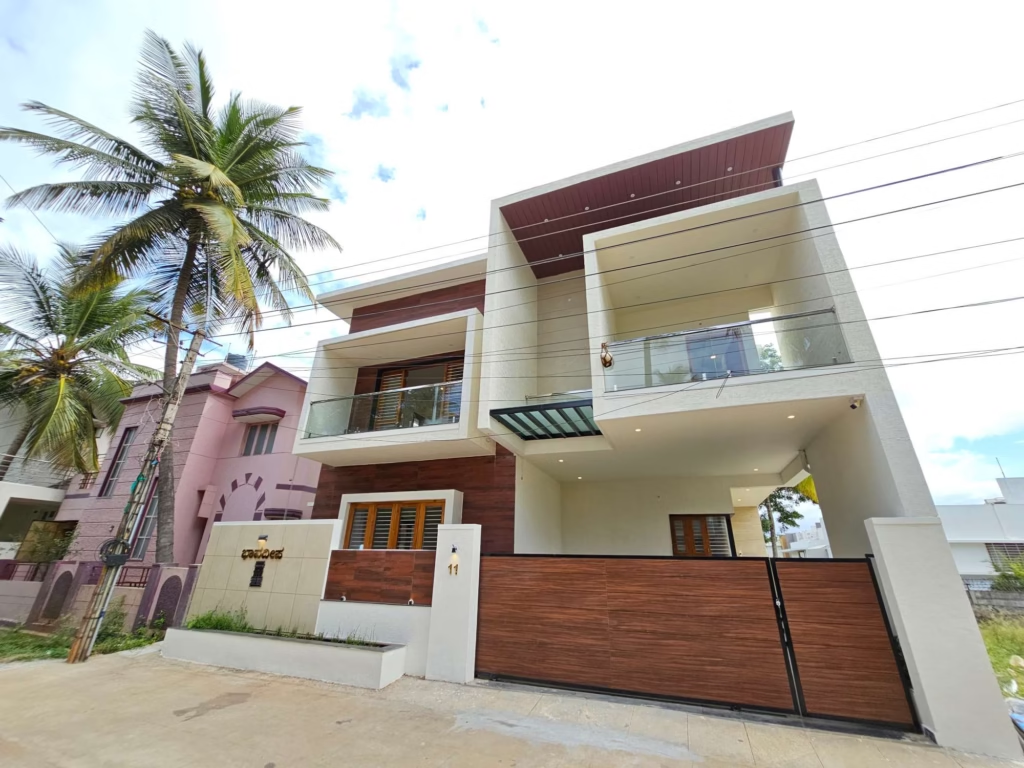
Quick Answer: For most Indian homes (G+0 to G+3), Fe 500D TMT bars from brands like Tata Tiscon, JSW Neosteel, or Jindal Panther are the best choice. They balance strength, flexibility, and earthquake resistance at a reasonable cost.
1. Why Steel Choice Matters More Than You Think
Steel is the skeleton of your house. Everything else — the cement, the bricks, the tiles — sits around it. Choose the wrong steel and you are building on a weak foundation that no amount of premium flooring or paint can fix.
The problem is that most homeowners know surprisingly little about steel. They hand this decision to a contractor, who may choose based on price, availability, or what they have a relationship with — not necessarily what is best for your home.
This guide gives you everything you need to make this decision yourself, confidently.
“Steel accounts for 15–20% of total construction cost, but it determines 100% of your home’s structural integrity for the next 50 years.” — Standard structural engineering principle, IS 456:2000
How Steel Works in an RCC Structure
Concrete is extremely strong in compression — it handles loads pushing down on it very well. But it is weak in tension — it cracks when forces try to pull it apart, like during an earthquake or under an uneven load. Steel reinforcement solves this problem. It carries the tensile forces that concrete cannot, which is why every column, beam, and slab in your house has steel running through it.
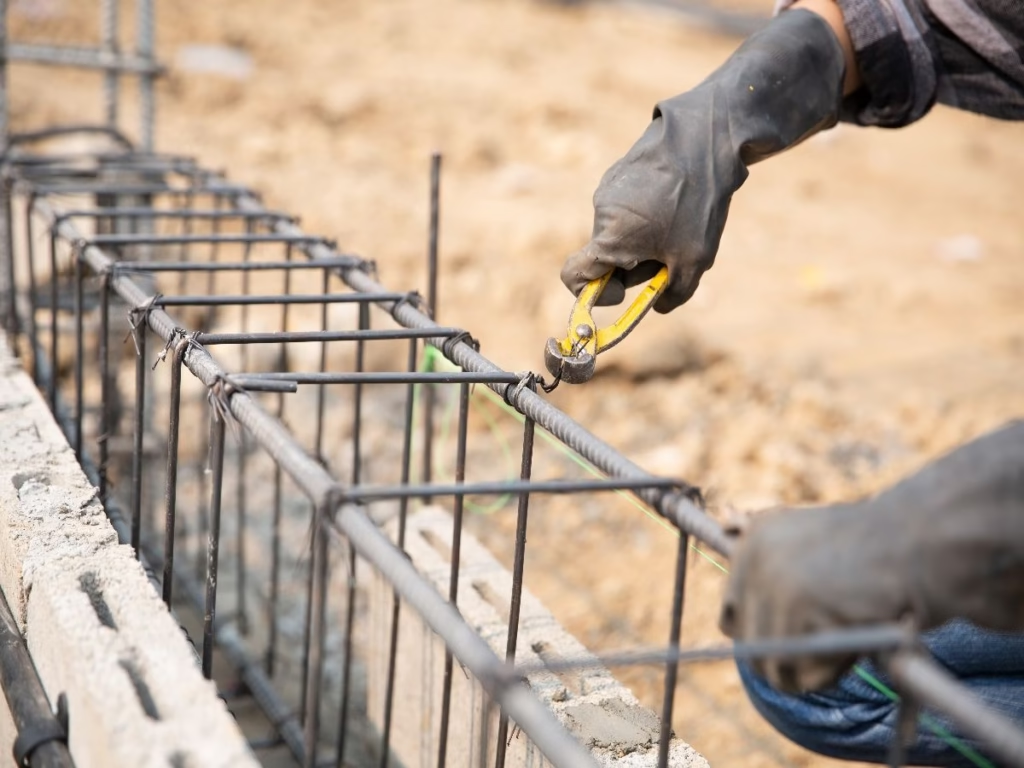
In Reinforced Cement Concrete (RCC), steel bars (rebars) are placed in a specific pattern inside formwork before concrete is poured. Once cured, the concrete and steel bond together and behave as a single structural unit — concrete handles compressive loads; steel handles tensile loads.
When the wrong steel is used — wrong grade, fake BIS certification, or poor-quality local manufacture — the concrete and steel do not work together efficiently. This can lead to premature cracking, corrosion of bars, structural weakening over time, and in serious cases, collapse under seismic stress.
2. Types of Steel Used in House Construction
Not all steel rods are the same. Here is a breakdown of the main types available in India and where each is used:
| Type of Steel | How It’s Made | Best Used For | Still Common? |
|---|---|---|---|
| TMT Bars (Thermo-Mechanically Treated) | Hot rolled, water quenched, self-tempered | Columns, beams, slabs, foundations — all structural work | ✅ Industry standard |
| TOR Steel (Twisted / Deformed) | Cold twisted after rolling | Older constructions; limited use today | ⚠️ Mostly phased out |
| Mild Steel (MS) Bars | Plain, undeformed hot-rolled bars | Non-structural elements, stirrups in light work | ⚠️ Rarely used structurally |
| HYSD Bars (High Yield Strength Deformed) | Deformed bars, higher strength than MS | Pre-TMT era construction | ❌ Not recommended today |
| Stainless Steel Rebar | Corrosion-resistant alloy steel | Marine/coastal structures, premium projects | ✅ Niche — premium cost |
TMT bars are the clear choice for all residential construction in India today. They offer the best combination of strength, ductility, weldability, and corrosion resistance. Every reputable builder and structural engineer specifies TMT bars.
What Makes TMT Bars Superior?
The secret to TMT bars is in the manufacturing process. Hot-rolled steel is passed through a water quenching system immediately after rolling. This rapidly cools the outer surface, forming a hard layer called martensite. The residual heat in the core then tempers this outer layer while keeping the core soft and ductile.
The result: a bar that is hard and strong on the outside (resists deformation) but soft and flexible on the inside (absorbs seismic energy without breaking). This is exactly what a house needs.
3. Understanding TMT Steel Grades
The Bureau of Indian Standards (BIS) under IS 1786:2008 classifies TMT bars into grades based on their minimum yield strength (measured in MPa). “Fe” stands for iron (ferrum), and the number is the minimum yield strength.
| Grade | Yield Strength | Ductility | Best For | Verdict |
|---|---|---|---|---|
| Fe 415 | 415 MPa | Very high | Minor repairs only | ❌ Outdated for new builds |
| Fe 500D | 500 MPa | Superior (‘D’ grade) | All residential homes G+0 to G+3 | ✅ Recommended |
| Fe 500 | 500 MPa | Standard | Budget alternative | ✅ Acceptable |
| Fe 550D | 550 MPa | High | G+3 and above, engineer-specified | ⚠️ Only when specified |
| Fe 600 | 600 MPa | Lower | Infrastructure and bridges | ❌ Not for homes |
What Does the ‘D’ Mean in Fe 500D?
The ‘D’ stands for Ductility. Fe 500D has a higher percentage elongation and a lower carbon-equivalent formula compared to standard Fe 500. This means it can bend and deform significantly before breaking — critical in an earthquake where your structure needs to flex rather than fracture.
Always prefer the ‘D’ grade for residential construction in India.
4. Fe 500D vs Fe 550D — Which Is Right for Your Home?
This is the most common question homeowners ask — and often get a confusing answer. Here is a clear comparison:
| Property | Fe 500D | Fe 550D |
|---|---|---|
| Minimum Yield Strength | 500 MPa | 550 MPa |
| Tensile Strength | 545 MPa (min) | 600 MPa (min) |
| Elongation | 12% minimum | 10% minimum |
| Ductility | Very high — better in earthquakes | High — slightly lower than 500D |
| Relative Cost (per kg) | Base reference | +8 to +12% premium |
| Recommended Use | All residential construction (G+0 to G+3) | G+3 and above, or engineer-specified |
| Best for Most Indian Homes? | ✅ Yes — the clear choice | ⚠️ Only if engineer specifies |
For 90% of independent houses in India — including all 1 BHK, 2 BHK, and 3 BHK ground-floor to triple-storey constructions — Fe 500D is the ideal grade. It provides more than adequate strength for residential loads, and its superior ductility gives better seismic performance than Fe 550D at a lower cost.
Fe 550D becomes relevant when your structural engineer has specifically designed the reinforcement around it — typically for buildings above G+3. Do not upgrade to Fe 550D without an engineer’s recommendation.
⚠️ Important: Do not mix Fe 500 and Fe 500D — or any two different grades — on the same structure. Different grades have different elongation properties and behave differently under load. Always use a single consistent grade throughout the entire structure.
5. Top 5 TMT Steel Brands in India 2026
Brand matters because it reflects manufacturing consistency, raw material quality, and process control. Here are the most trusted brands among structural engineers and builders across India:
1. Tata Tiscon — Best Overall
Product: Tata Steel · 500SD / 550SD Price (July 2026): ₹58 – ₹67 / kg
- Most consistent quality across all batches
- Widest dealer network across India
- Trusted by banks and engineers for home loan processing
- Excellent rib pattern for superior concrete bonding
- Clear BIS markings on every bar
2. JSW Neosteel — Best in South India
Product: JSW Steel · Fe 500D / 550D Price (July 2026): ₹56 – ₹64 / kg
- Strong in South and West India supply chain
- Excellent corrosion resistance (CRS grade available)
- Competitive pricing vs. Tata
- High ductility for seismic zones
- Strong availability in Mysore and Karnataka
3. SAIL TMT (SEQR) — Best PSU Option
Product: Steel Authority of India Price (July 2026): ₹53 – ₹62 / kg
- Government of India manufacturer — no quality concerns
- Excellent price-to-quality ratio
- Strong in Central and Eastern India
- Widely used in major government infrastructure
4. Jindal Panther — Best Value
Product: JSPL · Fe 500D / 550D Price (July 2026): ₹52 – ₹60 / kg
- Strong performance at competitive pricing
- BIS certified across all grades
- Good for budget-conscious projects
- Wide availability in North and Central India
5. Shyam Steel — Best Regional Choice
Product: Shyam Metalics · Fe 500D Price (July 2026): ₹50 – ₹58 / kg
- Strong in East India (Bengal, Odisha, Jharkhand)
- Competitive pricing with good quality
- BIS certified Fe 500D available
- Good option where Tata/JSW supply is limited
🚫 Avoid unbranded or “local” TMT bars. The Indian market is flooded with locally manufactured bars sold under misleading names. These may carry fake BIS markings and inconsistent grade properties. The price saving of ₹4–8/kg on a 4-tonne house project is roughly ₹16,000–₹32,000 — far less than the risk of structural failure.
6. Choosing the Right Bar Diameter
TMT bars come in diameters from 6mm to 32mm. Using the wrong diameter is as problematic as using the wrong grade. Here are the standard specifications for residential construction per IS 456:2000:
| Structural Element | Common Diameter | Why This Size | Note |
|---|---|---|---|
| Columns (main bars) | 12mm, 16mm | Primary load-bearing; needs high strength | Always 4 or 6 bars; engineer specifies |
| Column stirrups / ties | 6mm, 8mm | Confines the column and resists shear | Spacing is critical — do not skip |
| Beams (main bars) | 12mm, 16mm | Transfers load from slab to columns | Both top and bottom reinforcement needed |
| Beam stirrups | 8mm | Shear reinforcement in beams | Closer spacing at supports |
| Slab reinforcement | 8mm, 10mm | Distributes loads across the slab | Placed in a mesh/grid pattern |
| Foundation footings | 12mm, 16mm | Transfers column load to soil | Grid pattern; cover is critical |
| Lintel beams | 10mm, 12mm | Load transfer above door/window openings | Minimum 150mm bearing on each side |
| Staircase | 10mm, 12mm | Waist slab and individual tread reinforcement | Often underspecified on site — watch carefully |
📌 Always follow the structural drawing. The bar diameter and spacing shown in your engineer’s drawings are calculated specifications — not suggestions. Never allow a contractor to substitute a different diameter without written approval from the engineer.
7. TMT Steel Prices in India — July 2026
Steel prices fluctuate based on global iron ore prices, coking coal costs, freight, and domestic demand. Prices below are July 2026 market rates from authorised dealers. Prices vary 5–12% across regions.
| Brand | Grade | 8mm (₹/kg) | 10mm (₹/kg) | 12mm (₹/kg) | 16mm (₹/kg) |
|---|---|---|---|---|---|
| Tata Tiscon | Fe 500D | 64–67 | 60–64 | 58–62 | 57–61 |
| JSW Neosteel | Fe 500D | 62–65 | 58–62 | 56–60 | 55–59 |
| SAIL TMT (SEQR) | Fe 500D | 58–62 | 55–59 | 53–57 | 52–56 |
| Jindal Panther | Fe 500D | 57–60 | 54–58 | 52–56 | 51–55 |
| Shyam Steel | Fe 500D | 55–58 | 52–56 | 50–54 | 49–53 |
How much steel does a house need?
- 500 sq ft (1 BHK, ground floor): ~3.5–4 MT → ₹2.0L – ₹2.3L
- 1,000 sq ft (2–3 BHK, ground floor): ~5–7 MT → ₹3.0L – ₹4.0L
- 1,000 sq ft G+1 (both floors): ~8–12 MT → ₹5.0L – ₹7.0L
Steel Purchasing Tips
- Buy in bulk. Purchasing the total quantity at once saves 3–7% on price and ensures consistent batch quality throughout your build.
- Buy from authorised dealers only. Check the brand’s website for their official dealer locator. Authorised dealers provide test certificates and GST invoices.
- Time your purchase. Steel prices historically soften slightly during the monsoon (June–September). Buying during this window can save ₹2–4 per kg.
8. Five Steel Myths That Cost Homeowners Money
Myth 1: “Heavier steel bars are always better quality.”
Fact: Weight per metre is a fixed property defined by IS standards. Bars heavier than spec can indicate inconsistent manufacturing. The correct checks are the rib pattern, BIS marking, and tensile test — not weight. Overweight bars at the same price per kg mean you are getting less bar per rupee.
Myth 2: “Fe 550D is always better than Fe 500D for a house.”
Fact: Fe 550D is stronger but less ductile. For most residential homes, Fe 500D’s higher ductility provides better earthquake resistance. Using Fe 550D for a ground+1 home means paying a premium for strength you do not need, while slightly reducing the flexibility that protects you in seismic events.
Myth 3: “Rust on steel bars means the steel is bad and should be rejected.”
Fact: Light surface rust (a thin, reddish-brown film) actually improves the bond between steel and concrete. What you should reject is deep pitting rust, where the surface has corroded unevenly and the cross-section has visibly reduced. Light surface rust can be brushed off; heavily pitted bars should be replaced.
Myth 4: “Using more steel than specified makes the structure stronger.”
Fact: Over-reinforcing can cause problems. Concrete needs adequate space to flow around and bond with rebars. Too many bars prevent proper concrete cover, leading to voids and honeycombing. The structural engineer’s specified quantity is the result of precise calculations — more is not always better and can waste tens of thousands of rupees.
Myth 5: “Local unbranded TMT bars with ISI marks are the same as Tata or JSW.”
Fact: The ISI mark is only as trustworthy as the manufacturer’s certification process. Fake BIS markings are rampant in the unbranded steel market. Local bars may fail tensile tests and show poor ductility. The ₹6–10/kg saving on local bars on a 4-MT house project is roughly ₹24,000–₹40,000 — far less than the cost of structural failure.
9. How to Store and Handle Steel on Site
Even the best steel can be compromised by poor site practices. Verify these rules are being followed on your site:
| Practice | Why It Matters |
|---|---|
| Store bars on raised wooden planks | Keeps bars off ground and away from soil moisture, preventing corrosion from below |
| Cover with tarpaulin during rain | Prolonged rain exposure accelerates rust beyond the beneficial light-rust stage |
| Do not store near chemicals or fertilisers | Chemical contact causes accelerated, uneven corrosion that weakens bar cross-section |
| Use mechanical bar-bending machines | Manual bending can crack the outer martensite layer of TMT bars, reducing strength at bend points |
| Clean bars before placing | Remove oil, paint, mud, or loose scale — any coating reduces the steel-concrete bond |
| Maintain minimum concrete cover | Per IS 456:2000: 40mm for footings, 25mm for columns/beams, 15mm for slabs |
| Never use fire to bend bars | Heat destroys the thermo-mechanical treatment that gives TMT bars their properties |
| Do not reuse old steel bars | Used bars may have invisible stress cracks and unknown grade properties |
10. Buyer’s Checklist Before You Purchase
Use this checklist every time steel is purchased for your project. Do not accept any delivery without completing these checks.
- Confirm the grade matches structural drawings (Fe 500D recommended for most homes)
- Buy only from an authorised dealer — check the brand’s official dealer list
- Verify BIS markings embossed on the bar itself, not just on the bundle tag
- Request the test certificate / mill certificate for the batch and verify it matches the delivery
- Check that all bars in a bundle are the same diameter (mixed diameter bundles are a red flag)
- Visually inspect for deep pitting rust or damage before accepting delivery
- Weigh a sample bundle and verify it matches the standard weight per metre for that diameter
- Ensure the invoice is GST-compliant from a registered dealer
- Check the rib pattern is clearly defined and uniform along the bar
- Confirm the delivery note specifies brand, grade, diameter, and batch number
11. Frequently Asked Questions
In Mysore and across Karnataka, JSW Neosteel and Tata Tiscon are the two most commonly specified brands due to strong regional distribution and consistent quality. JSW has a particular supply advantage in South India given its Vijayanagar (Ballari) plant proximity to Karnataka. For budget-sensitive projects, SAIL TMT (SEQR) is a reliable public-sector alternative